

 Adventure Tours
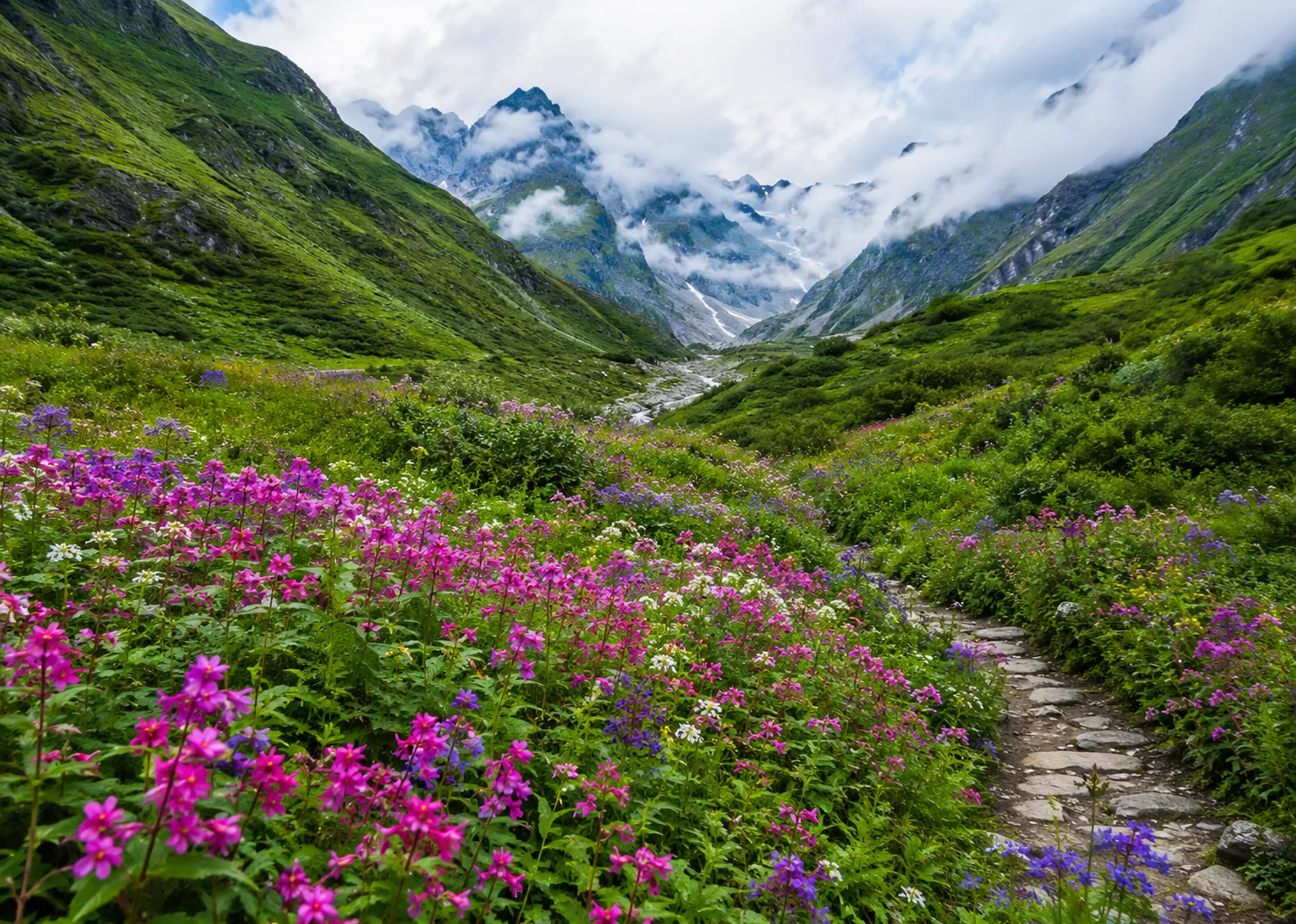
Imagine walking through a valley where vibrant wildflowers stretch as far as the eye can see, snow-capped Himalayan peaks tower in the background, and fresh mountain air fills every breath. It may sound like a dream, but this is exactly what awaits you at the Valley of Flowers National Park in Uttarakhand.
A UNESCO World Heritage Site, the Valley of Flowers is one of India’s most breathtaking trekking destinations. Every monsoon, the valley transforms into a colourful paradise with hundreds of species of blooming flowers, making it a favourite among trekkers, photographers, and nature lovers alike.
A Glimpse into the History and Heritage of the Valley of Flowers
Nestled in the Chamoli district of Uttarakhand, Valley of Flowers National Park is one of India’s most spectacular Himalayan landscapes. Spread across approximately 87.5 square kilometres and is situated at an elevation of around 3,600 metres (11,800 feet) above sea level.
The valley remained largely unknown to the outside world until 1931, when British mountaineer Frank S. Smythe and his fellow climbers accidentally discovered it while returning from an expedition to Mount Kamet. Enchanted by the valley’s vibrant carpet of wildflowers, Smythe later wrote the famous book The Valley of Flowers, introducing its breathtaking beauty to the world.
Recognising its exceptional biodiversity and ecological importance, the area was officially declared the Valley of Flowers National Park in 1982 by the Government of India. Its global significance was further acknowledged when it became part of the Nanda Devi and Valley of Flowers National Parks UNESCO World Heritage Site in 2005.
Why Is the Valley of Flowers So Special?
The valley is teeming with hundreds of wildflowers in vibrant colours, including orchids, poppies, primulas, marigolds, daisies, and many rare Himalayan flowers during the flowering season. This is a changing landscape, with color changing every few weeks, so that every visit is unique.
Best Time to Visit
When you want to undertake a trek in the Valley of Flowers, time plays a vital role in your planning.
The national park is open most of the time from June to October, with the best time to see the flowers in full bloom between mid-July and mid-August. The time when the valley is most colourful and interesting, greenery and flowers can be seen on the meadows.
Early September is another fantastic time of year to visit and enjoy the great scenery without the crowds.
Understanding the Trek
The Valley of Flowers trek is a moderately easy hike and is suitable for those who have a fairly good level of fitness.
The route starts from Govindghat, then to Pulna, and then to Ghangaria, which is the base camp for the Valley of Flowers and Hemkund Sahib. The walk to the entrance of the national park from Ghangaria is approximately 4 kilometres, and from there, a few kilometres further through the valley, depending on your destination.
What Should You Pack?
Packing wisely can make your trek much more comfortable.
Here are a few essentials to carry:
- Comfortable trekking shoes with good grip
- Waterproof jacket or raincoat
- Warm clothing for chilly mornings and evenings
- Backpack with rain cover
- Water bottle
- Energy snacks
- Sunscreen and sunglasses
- Cap or woollen hat
- Personal medicines and a basic first-aid kit
- Camera or smartphone for capturing the incredible scenery
Since the weather in the mountains can change quickly, it’s always better to be prepared.
Don’t Miss Hemkund Sahib
Hemkund Sahib is another popular destination for many travelers who visit the Valley of Flowers during their trip, as it is one of the highest Sikh pilgrimage sites in the world. The journey to Hemkund Sahib at a height of more than 4,300 metres is tougher, but highly rewarding. The glacial lake is crystal clear and surrounded by towering mountains, creating a peaceful and spiritual atmosphere that is perfect for your journey.
Helpful Tips for First-Time Trekkers
For the first time in the Himalayas, a small amount of preparation can go a long way.
- A few weeks before travelling, begin exercising regularly to build up stamina.
- Drink plenty of water during the hike.
- Take a leisurely and restful pace.
- Keep it as light as possible with only the necessary items in your backpack.
- Check the weather forecast before travelling.
- Follow your trek leader or local guide’s instructions at all times.
- The hike is not a sprint; it is a time to take in nature.
Why Plan Your Trip with Trippystan Travels?
When it comes to the Himalayan trek, there are a lot of things you need to plan in order for the trip to go smoothly. Let Trippystan Travels handle the details for you as opposed to you doing it yourself. Whether you’re planning a customised trek or prefer a more relaxed experience, Trippystan Travels has you covered with comfortable accommodations, transportation, and expert guidance, ensuring your Valley of Flowers journey is memorable, safe, and smooth.
Final Thoughts
The Valley of Flowers Trek isn’t merely a walk; it’s a journey into the heart of nature, unspoiled and untouched. This is the beauty of walking through colourful alpine meadows, hearing the sounds of the flowing streams and feeling the fresh mountain air; it is something that you will remember after you have come back.
From the seasoned trekker to the first-time adventurer, the Valley of Flowers offers a stunning landscape, tranquil surroundings, and unforgettable moments.


Comments are closed